_1786200691163-Z2-4cPTu.png)
Solar Screen Resource Guide
Solar Screen Mesh Types: 80% vs 90%, Colors & Materials Explained
Not all solar screen mesh is the same. This guide explains the differences between 80% and 90% density mesh, available colors and frame finishes, what Phifer SunTex® is and why it matters, and how to choose the right fabric for each window in your Phoenix-area home.
Quick answers
Up to 90%
Heat blocked by 90% mesh
Up to 80%
Heat blocked by 80% mesh
10–15 yrs
Expected mesh lifespan in AZ
80% vs 90% Solar Screen Mesh: What's the Difference?
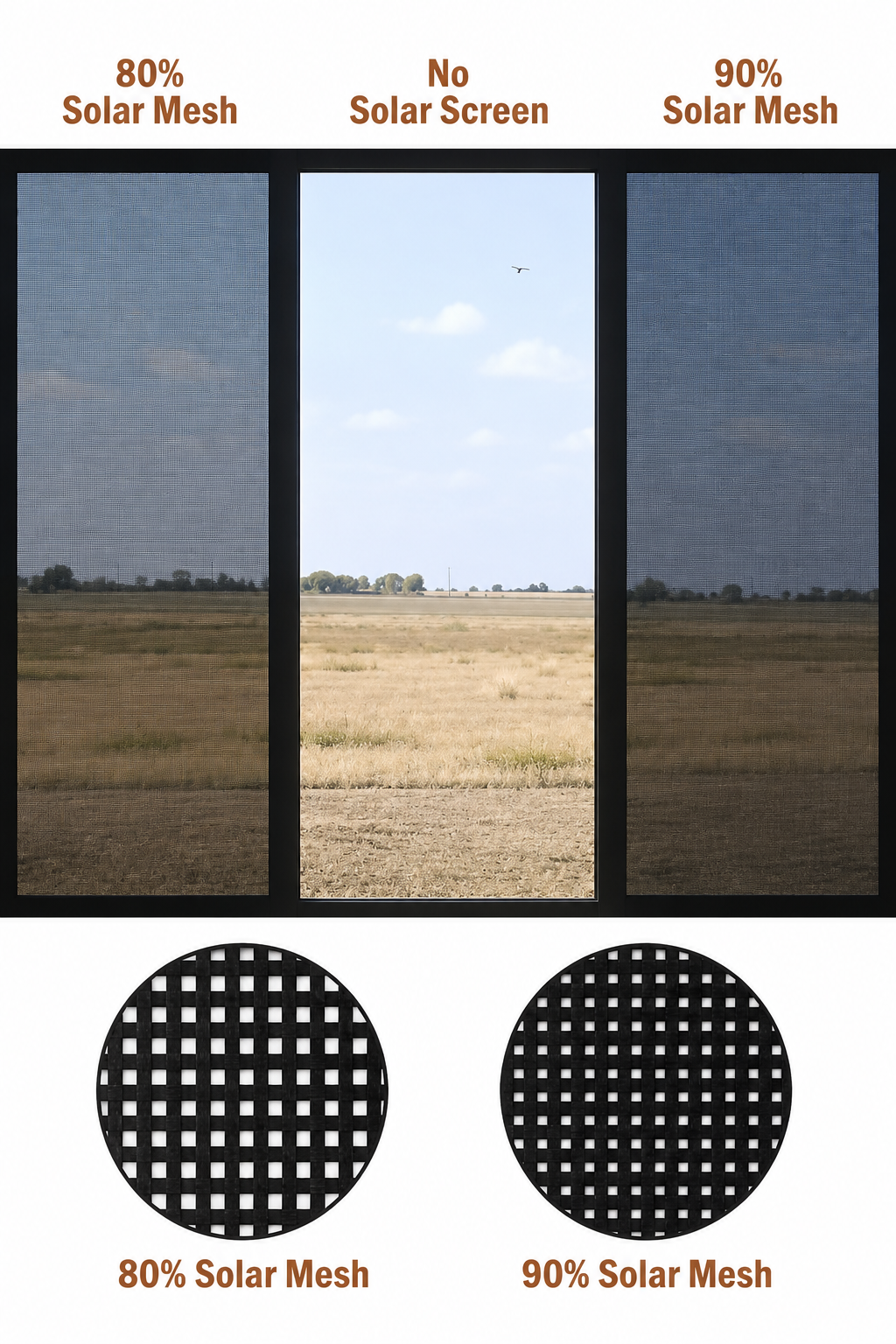
The number refers to the percentage of solar energy, heat and UV, that the mesh blocks before it reaches your glass. Both options use the same Phifer SunTex® woven fabric construction; only the weave density differs.
The practical difference comes down to heat protection vs. outward visibility. 90% mesh is the right call for windows that take direct afternoon sun. 80% mesh is a better fit where you want more natural light or a clearer view out.
90% Mesh: Maximum Protection
Best for south-, east-, and west-facing windows that receive direct sun for more than 3 hours per day.
- Blocks up to 90% of solar heat
- Blocks up to 90% of UV radiation
- Excellent daytime privacy
- Strongest glare reduction
- Heavy pet resistance
80% Mesh: Balanced Light and Protection
Best for north-facing windows, shaded exposures, or rooms where natural light is a priority.
- Blocks up to 80% of solar heat
- Blocks up to 80% of UV radiation
- Better outward visibility
- More natural light indoors
- Still excellent bug protection
Pro tip: Mix densities on the same house
Many Phoenix homeowners use 90% mesh on south and west walls where summer afternoon heat is brutal, and 80% mesh on north and east walls where direct sun is less intense. This gives you maximum protection where it counts most without sacrificing light in every room.
Phifer SunTex®: The Mesh We Use and Why
Not all solar screen fabric is created equal. We exclusively use Phifer SunTex®, the industry benchmark for residential solar screen mesh, because inferior mesh fails fast in Arizona conditions.
Heavy-duty woven construction
PVC-coated polyester yarns woven tightly to resist stretching, sagging, and deformation over time.
UV-stabilized coating
The PVC coating is engineered to resist UV degradation. Cheaper mesh fades within 2–3 years; SunTex holds its color and performance for 10–15.
Made in the USA
Phifer has manufactured SunTex in Tuscaloosa, Alabama for decades under consistent quality standards.
Corrosion resistant
Unlike metal mesh alternatives, SunTex does not rust, corrode, or oxidize, important in areas with water or humidity.
Pet resistant
The heavy gauge construction resists dogs and cats pushing through or clawing, far better than standard fiberglass bug screen.
Backed by our warranty
We stand behind the materials and installation. If something goes wrong with our workmanship, we make it right.
Mesh & Frame Colors
Solar screens should look like they belong on the house. We offer mesh and frame colors that work with the most common Phoenix-area home exteriors: desert stucco, painted block, and modern finishes.
Mesh Colors
Black
Best glare reduction; disappears visually in window frame
Brown / Bronze
Classic choice for brown or bronze window frames
Stucco (Tan/Beige)
Blends with light-colored desert stucco exteriors
Gray / Charcoal
Neutral; works with modern and transitional homes
Desert Sand
Warm neutral for southwestern-style homes
Frame Colors
White
Clean look for white window trim and modern homes
Bronze
Matches most standard anodized aluminum window frames
Tan / Adobe
Blends with stucco and southwestern desert palettes
Champagne
Warm neutral that pairs well with light stucco
Black
Bold, modern; popular with dark window frames
Frequently Asked Questions About Solar Screen Mesh
Everything Phoenix homeowners ask us before choosing their screens.